Smart People’s View on Risk and Return
advertisement
In finance, the connection between risk and return is often summarized in the phrase "greater risk means greater return." This oversimplification is a misconception that informed investors have discarded. Individuals who have amassed considerable wealth perceive risk and return differently; rather than merely seeking equilibrium, they reformulate the relationship: risk should be viewed not as an expense but as a concept to comprehend, and returns must be seen not as targets, but as outcomes of judicious risk oversight.
advertisement

Risk is Evaluated by Effect, Not Likelihood
Astute investors concentrate on the potential effects of risk rather than merely its likelihood. An event with a low chance but the capacity to halve one's wealth poses a greater threat than a higher chance of a minor loss. They focus on shielding themselves against "disastrous risks" by employing strategies such as tail risk hedging, instead of expending efforts on insignificant market movements that do not undermine their primary wealth.
Return Emerges from Risk Management
In contrast to typical investors who prioritize chasing returns first and managing risks afterward, knowledgeable individuals reverse this approach: reliable returns arise from proficient risk management. They construct portfolios with assets that are not correlated, so when one asset declines, gains from another compensate, thus ensuring that returns are consistent and not reliant on random short-term market movements.
Intelligent investors are prepared to relinquish "additional returns" linked to hidden dangers. Investments that promise high yields but lack clarity or are based on speculative market behavior often conceal unexpected risks. They prefer moderate returns associated with well-defined risk factors, steering clear of the "illusion of high returns" that may result in irreversible wealth extinction.
View Volatility as a Risk Opportunity Rather Than a Danger
Many people confuse volatility with risk, but perceptive investors interpret it as a chance. Market declines enable them to purchase quality assets at reduced prices, while momentary price changes provide opportunities to realign portfolios without succumbing to emotional responses. They leverage volatility to increase long-term returns rather than letting it intimidate them.

Risk Tolerance is Fluid, Not Static
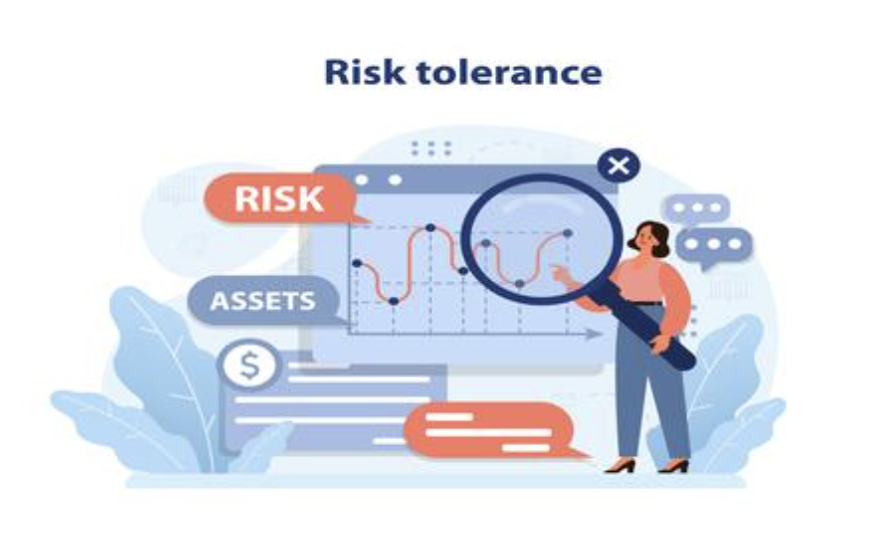
Wise individuals do not adhere to a fixed level of risk tolerance; instead, they modify it in accordance with different life stages and the scale of their assets. Younger investors with increasing wealth may embrace higher strategic risks, while those nearing retirement prioritize safeguarding their capital. This flexible adaptation guarantees that their risk exposure consistently aligns with their capacity to withstand losses.
Employ Risk Transfer to Secure Fundamental Returns
Risk transfer is an often-overlooked capability in effective wealth management. Instruments such as tailored insurance, credit default swaps, and asset securitization can shift particular risks to external entities, enabling investors to secure fundamental returns while maintaining potential for growth. This technique transforms passive risk absorption into proactive risk management.
To sum up, the perspective of savvy investors regarding risk and return is grounded in logic and a focus on the long term. They do not pursue the fallacy of "high risk, high return," but instead manage risk effectively to cultivate steady returns—this represents the fundamental principle of sustaining and enhancing wealth over an extended period.
(Writer:Tick)
Related Articles