Bitcoin: A Financial Revolution
advertisement
For individuals with significant wealth, overlooking Bitcoin as simply speculation overlooks its significance as a transformative moment in financial history. More than just fluctuations in price, Bitcoin signifies the inception of a decentralized, peer-to-peer financial system that contests the long-standing dominance of central banks and fractional reserve banking. This is not a fleeting fad; it constitutes a fundamental change in the methods of storing, moving, and managing value, with substantial consequences for wealthy investments and the worldwide economic landscape.
advertisement
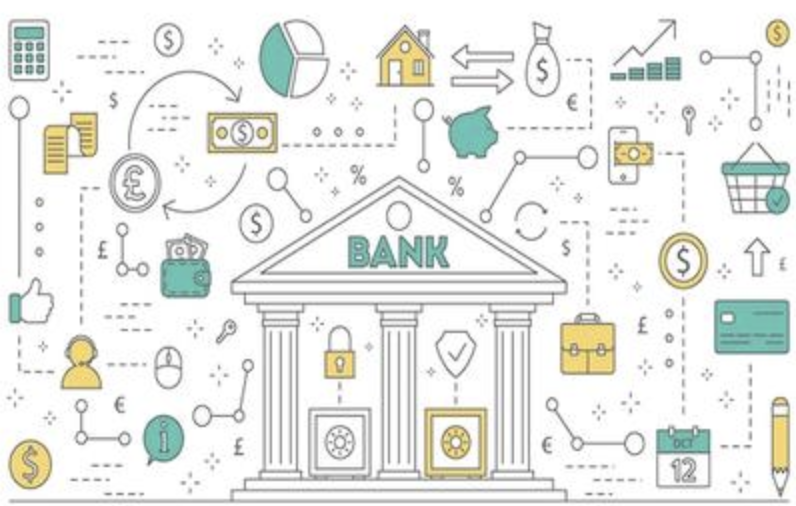
The End of Centralized Monetary Control
Central banks manage the supply of money, frequently leading to currency devaluation through quantitative easing. The capped quantity of 21 million Bitcoins removes this threat—no single authority can artificially increase its value. For investors concerned about currency erosion (evident in the stimulus measures following 2008 or the recent inflation surges), Bitcoin serves as "digital gold," a limited asset that maintains purchasing power. This transition from reliance on institutions to reliance on mathematical principles is unprecedented in contemporary finance.

Conventional banking confines wealth within specific nations, with cross-border transfers impeded by fees and delays. Bitcoin allows for immediate, frictionless transactions worldwide, irrespective of political borders. A wealthy investor situated in Singapore can transfer value to another in Brazil without intermediaries, avoiding capital regulations and currency conversion fees. This results in a genuinely global financial infrastructure, free from national regulatory constraints.
Ownership Without Counterparty Risk
When you possess stocks or bonds, you depend on brokers, custodians, or government bodies to fulfill your claim. Bitcoin allows for direct, unchangeable ownership—stored in a wallet that you manage, without a third party to default on. In times of banking crises (like those experienced in Cyprus in 2013 or Lebanon in 2020), Bitcoin acted as a crucial resource for individuals facing capital restrictions. For wealthy investors, this "self-custody" approach offers a unique level of security for their assets.
The blockchain technology behind Bitcoin facilitates transactions without the need for trust—there is no requirement for a bank to authenticate or facilitate payments. Smart contracts built on Bitcoin’s infrastructure (through layers like Lightning) enable users to automate intricate financial arrangements, including escrow and royalty payouts, without needing intermediaries. This reduces expenses and minimizes fraud, transforming the methods employed for high-value trades in industries such as real estate or art transactions.
A Hedge Against Systemic Financial Risk
Traditional investments (stocks, bonds, real estate) often correlate with the larger financial market. Bitcoin has demonstrated minimal correlation with these assets, making it a valuable tool for diversification. During market downturns (such as in March 2020 or 2022), Bitcoin initially fell but recovered more swiftly than many equities, showcasing its robustness. For portfolios valued in the millions, allocating 1-5% to Bitcoin can help reduce losses during systemic crises.
Institutional Adoption Legitimizes the Revolution
Prominent financial firms—from BlackRock to Fidelity—are now providing Bitcoin investment options, and nations like El Salvador have recognized it as legitimate currency. This involvement from institutions goes beyond mere speculation; it acknowledges that Bitcoin constitutes a novel asset class. For high-net-worth individuals, this means access to Bitcoin via regulated channels such as ETFs or private investments, bringing the revolution into the realm of traditional asset management strategies.
Bitcoin’s price fluctuations may attract attention, but its real transformation lies in altering the core elements of finance. For wealthy investors, comprehending this shift is vital—it is crucial for successfully navigating the forthcoming phase of wealth management. Bitcoin serves not just as a vehicle for profit; it also encourages a re-evaluation of monetary systems, reinstating control and security to those who possess it.
(Writer:Lorik)
Related Articles